Helix piercing is one of the most popular ear decorations nowadays, especially among the ones who want subtlety and style at the same time. This ear modification goes through the upper cartilage which leads to the ear and allows for more expressive jewelry to be worn. People opt for helix piercing mainly because of its easy placement and suitability to both minimalist and layered ear looks. Helix piercing is done by a skilled professional and a sterile needle is used to cut the cartilage and clear the jewelry placement area. Aftercare will be crucial in the whole process of healing, since cartilage takes longer and more care to heal after a helix piercing. The usual queries revolve around pain, time for healing, and which metal is okay for jewelry, etc. After all, while helix piercing has its downsides such as needing proper aftercare, it is still a very attractive and versatile option in the long term.
Table of Contents
ToggleWhat Is a Helix Piercing?
Definition and Location
Helix piercing refers to a perforation made on the outer upper ear cartilage. It is a more challenging modification than lobe piercings, as lobe perforations are done on the softest tissue. The helix site starts from the area near the head and goes up in an arc; the professionals place the helix piercing depending on the ear shape so that it looks harmonious. Cartilage has fewer blood vessels than lobe, and thus, the healing process of cartilage piercing is longer. Helix piercings are chosen for their discrete yet visible location, reasons being the wearing of jewelry in other parts of the ear or personal expression. Helix piercings are perfect for those who wish to have an elegant and stylish addition that goes well with their current ear jewelry. It is very important to have a correct assessment done in order to ensure safety.
History and Popularity
Helix piercings trace roots to ancient cultures where ear modifications symbolized status or rites. Modern trends surged in the 1990s with body art rise. Today, social media boosts appeal through influencer showcases. Statistics show increasing demand among young adults for curated ears. Fashion integrates it with casual and formal attire. Cultural shifts view it as mainstream expression. Accessibility in studios contributes to growth. Awareness of safe practices evolves with education. This piercing adapts to personal tastes across demographics.
How It Differs from Other Ear Piercings
Helix piercings stand apart from lobe versions in tissue type and recovery needs. Lobes involve vascular soft areas that mend quickly, sometimes in a month, whereas helix piercing targets less vascular cartilage, extending healing timelines. Helix piercing can be styled with a wider variety of jewelry pieces because of the curve of the ear rim, in contrast to tragus or conch piercings which are more limited to certain jewelry pieces only. Daith hides in folds, rook in ridges, but helix piercings can be stacked along one path, unlike isolated spots such as the snug. Discomfort levels differ helix piercing is usually moderate compared to sharper sensations in denser areas. Maintenance aligns with other cartilage piercings, stressing cleanliness and minimal disturbance. Understanding these differences helps plan ear arrangements for balanced and aesthetically pleasing results.
Benefits of Helix Piercings
Is It Attractive?
Helix piercings enhance the looks of the ear with shiny and smooth lines. The curve accentuates natural shapes, drawing eyes subtly. Jewelry adds color or texture for personality. Stacked setups create artful displays. It suits various face forms, enhancing features. Minimalism or boldness fits moods. Longevity means lasting style without fades. Community shares ideas for inspiration. This modification elevates everyday looks effortlessly.
Versatility in Style
Helix spots allow mixing metals, gems, or shapes. Switch pieces for occasions, from work to events. Combine with cuffs or chains for layers. Adapt to seasons with themes like floral or geometric. It works solo or in groups. Experimentation keeps interest alive. Affordable updates refresh appearances. This flexibility attracts diverse users seeking change.
Types of Helix Piercings
Standard Helix
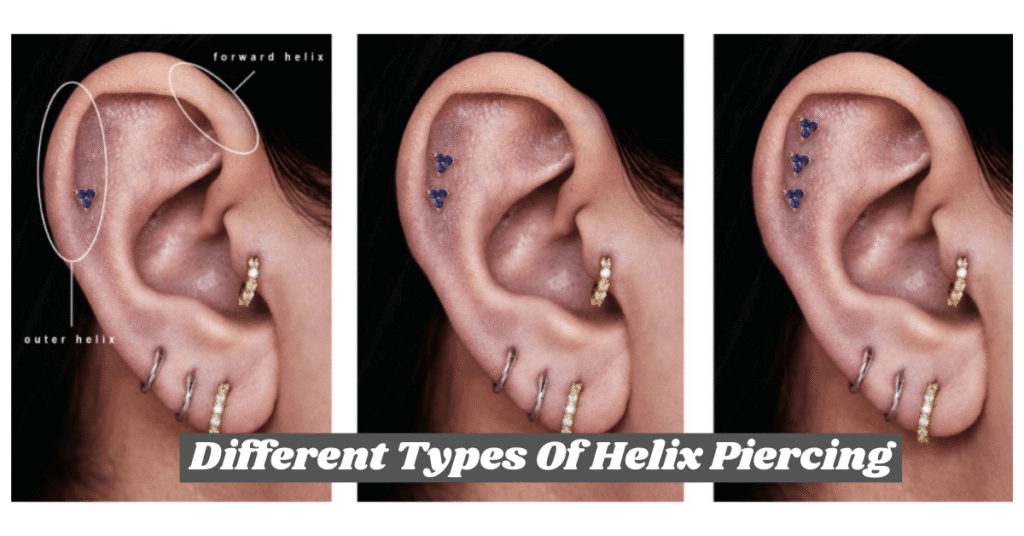
Standard helix targets the upper rim cartilage. It acts as a base for cartilage changes. Placement often centers for balance. Suited for first-timers with simple structure. Recovery mirrors cartilage norms, initial puffiness expected. Accessories such as posts or circles complement. Positions vary by ear dimensions; higher or lower shifts impact. Pros check thickness to dodge issues. Many begin here then expand. It harmonizes with lobe additions for unified designs.
Forward Helix
Forward helix hits cartilage close to face, above tragus. This angles forward for distinct highlight, unlike back standards. Precision marking needed near ear base. Discomfort sharper in compact tissue. Clusters of multiples form groups. Small posts reduce hair catches. Ear forms differ; some lack room. Suggested for faint accents. It matches front piercings like tragus.
Double and Triple Helix
Double helix stacks two holes on rim, triple three. Linear setup dramatic. Gaps crucial for swell and mend. Often done together if ear allows. Discomfort builds but per hole consistent. Coordinate accessories like uniform posts or rods. Triples need extra vigilance against rubs. Spacious cartilage ideal. Appeals to ear collectors.
Mid, Flat, and Hidden Helix
Mid helix centers on rim for equilibrium. Flat helix aims at upper flat cartilage. Hidden helix conceals behind rim, front view subtle. Each brings distinct charm; mid symmetric, flat wide accessories, hidden discreet. Assess ear for viability. Sensation uniform. Curved rods good for flats, seamless for hiddens. Expand choices past standards.
Other Variations
Outer helix curves along edge extremes. Inner helix tucks closer to head. Orbital connects two with ring. Industrial bars through multiples. Each adds twist. Outer bold, inner intimate. Orbital unique link. Industrial spans. Suit anatomy and preference. Consult for options.
The Piercing Process
Choosing a Studio
Select facilities with strong reputations and feedback. Look for cleanliness and certification. Visit to observe environment. Staff knowledge matters. Ensure single-use tools. Location convenience helps follow-ups. Budget aligns with quality. Prioritize safety over price.
Preparation Steps
Research trusted places with good ratings. Book consult for anatomy talk. Skip thinners like booze or pills to cut bleeds. Eat prior for stability. Dress easy, secure hair. Piercer sanitizes site. Mark with ink for okay. Gear includes fresh needles and pieces. Session quick post setup. Calm breaths ease moment.
What Happens During the Procedure
Piercer gloves up, sets sterile items. Post mark, optional clamp holds. Needle thrusts, jewelry follows. Sharp twinge and push felt. Little blood typical. Secure item, mirror check. Care tips given. Duration 10-15 mins. Comfort prioritized.
Immediate Aftermath
Post-puncture, site swells slightly. Tenderness normal. Apply cold for relief. Avoid touches. Receive saline and instructions. Monitor changes. Rest ear side. Hydrate, eat light. Return if odd signs. Transition to routine care begins.
Pain and Healing Time
Expected Pain Levels
Discomfort from helix rates 4-7/10, personal variance. Cartilage crunch distinct. Forward spots sting more near nerves. Peak at needle, then ache. Swell and sore days-weeks. Stress or tiredness amps feel. Skilled methods lessen. Brief against other mods.
Factors Affecting Pain
Tolerance differs by person. Ear thickness plays role. Piercer skill impacts. Time of day, hydration affect. Previous experience builds resilience. Anesthesia options rare. Mindset positive helps. After, meds ease.
Typical Healing Duration
Helix mends 3-12 months, often 6-9. Cartilage slow sans blood flow. Early swell drops weeks. Full strength year. Care, wellness influence. Less red, stable signs progress. Resize at 6-8 weeks. Wait prevents troubles.
Stages of Healing
Initial: swell, red days. Crust forms. Intermediate: itch, flake weeks-months. Tissue rebuilds. Final: stable, no tender. Months to year. Consistent care each phase. Adjust habits accordingly.
Cost Considerations
Factors Influencing Price
Helix costs $30-75, location, skill dependent. Cities higher than countryside. Seasoned pros premium. Material ups like titanium. Hygiene, kits include. Multi deals save. Local checks budget.
Average Costs by Region
US urban $50-100. Europe similar. Australia $60-90. Asia lower $20-50. Variations by economy. Research specifics.
Aftercare Instructions
Daily Cleaning Routine
Clean twice with saline. Hands soap first. Spray or dab cotton. No twist. Shower rinse crusts gently. Dry paper. Air exposure. Months routine.
Things to Avoid During Healing
No touches but clean. Skip water bodies 6-8 weeks bacteria. Side sleep no; pillow aid. Hair clear snags. Harsh chems out. Early change no. Phone ear contact less.
When to Seek Professional Help
Watch red, swell, discharge. Fever, pain spread infection. Bumps, scars assess. Embed or reject urgent. Ongoing ache check. Downsize 6 weeks. Visits track.
Long-Term Maintenance
Healed, clean regular. Check fit periodic. Quality pieces last. Avoid trauma. Health boosts. Resize if needed. Enjoy safely.
Potential Risks and Complications
Common Issues
Infections from hygiene lapses, red, pus, warm. Scars, keloids irritation. Rejection body expels. Swell, bleed start. Tears snags. Allergies itch metals. Technique cuts.
Prevention Strategies
Sterile studios choose. Grade materials titanium. Care strict. Trauma dodge. Health maintain. Creds research. Issues early fix.
Treatment Options
Infections antibiotics. Bumps saline, tea tree. Rejection remove. Consult docs severe. Home remedies mild. Follow pros.
Jewelry Options for Helix Piercings
Initial Jewelry Choices
Flat backs, barbells start comfy. Less move heal. 16-18 gauge. Length swell room 1/4-3/8. Titanium, gold no react.
Options for Healed Piercings
Healed, hoops, rings, beads. Variety add. Curved suit. Gems custom. Fit prevent shift. Vendors quality.
Material Recommendations
Titanium, niobium, 14k gold sensitive. Resist corrode, allergy. No nickel low. Solid durable. Certs check.
Sizing and Fit
Gauge standard 16. Length swell initial long, then short. Diameter hoops curve. Measure pro. Comfort key.
How to Choose a Professional Piercer
Key Qualities to Look For
Experience, portfolios clean. APP member. Autoclave show. Reviews hygiene, manner. Needle only.
Questions to Ask
Sterile how. Materials what. Care how. Times based experience. Tools see. Comps knowledge. Red Flags to Avoid Dirty space. Gun use. Rush feel. Vague answers. Low price suspicious. No after support. Instinct trust.
Styling Ideas for Helix Piercings
Mixing with Other Piercings
Helix lobe pair layers. Conch daith depth. Doubles symmetry. Studs blend. Hoops pop. Balance ears. Themes celestial floral.
Trendy Designs
Pavé Huggies, chains connect. Opal diamond spark. Geo shapes modern. Gems color. Custom reflect.
Celebrity Inspirations
Stars like Emma Watson simple studs. Rihanna bold stacks. Influences trends. Zendaya mixed metals. Draw ideas. Adapt personal.
Conclusion
Helix piercing offers adaptable ear style with right prep. Helix piercing types, process, care, and risks covered ensure readiness. Knowledge empowers safe choices, positive results. Pros, routine aid enjoyment. This guide assists confident steps, making helix piercing a secure style boost.