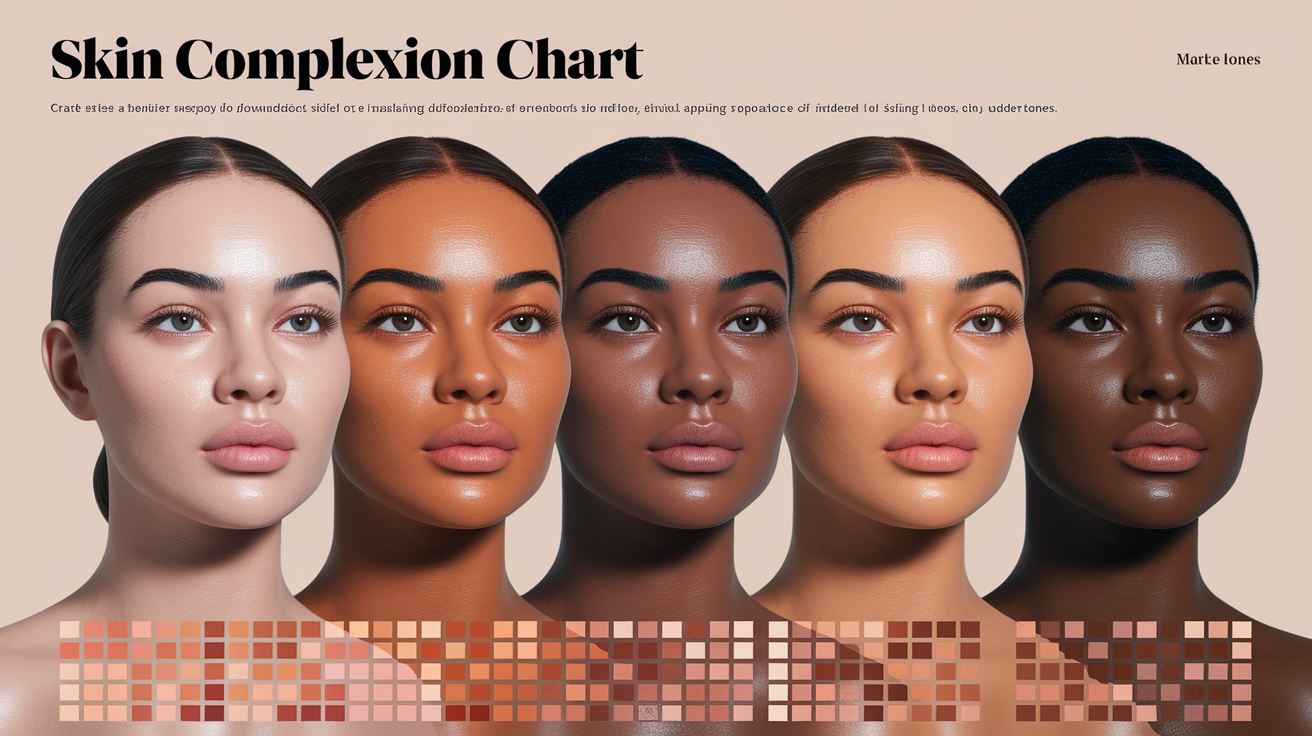
How many times have you observed that there are certain colors that go well with certain people and vice versa? Selecting a skin tone chart foundation that is practically invisible on your skin tone chart or picking the right clothes that brighten one’s face are just a couple of examples of how powerful the right hue can be. Skin tone chart assist with these decisions by presenting a straightforward method for recognizing and comprehending the diverse tints of human skin. This piece explains the fundamentals of these charts, their applications, and gives some hands-on advice. The audience will get to know different kinds, methods to figure out personal shades, and uses in daily life like makeup and fashion. One may expect precise elucidations, incremental support, and case studies as means to make the knowledge both practical and accessible.
What Is a Skin Tone Chart?
The primary definition and the basic objective of skin tone charts are given in this part. A skin tone chart is a typical reference that is capable of depicting and classifying the variety of human skin colors. Usually, the skin tone chart is an illustration that presents a gradient from lightest to the darkest and with the addition of the warm or cool as the undertones. The major purpose of these charts is in the cosmetic domain since the skin-product matching avoids the appearance of mismatched looks. Painters rely on them to mix colors that are realistic, and skin doctors take them into consideration by classifying the sun allergy. The chart is manifested mainly in the form of a grid or scale with divided parts bearing names, thus making it really easy for anyone to perform a comparison with their own skin. Besides color, it takes into account aspects like the pigmentation of the skin, which is a major factor that determines how the skin reacts to light or products. It is imperative to see this tool first as an indication of skin that is not of one shade but rather a combination of surface tone and the pigments underneath. For example, a person might look light outside, but the warm undertones that are present would eventually affect the color choices. Charts are a great help in such cases as they provide the benchmarks, which are often referred to by numbers or names for the sake of clarity. People in daily life use these for online shopping for makeup and for clothes, thus guaranteeing better matches and no need for trial and error. All in all, the chart acts as a connection between appearance and wise options, thereby making one feel sure about his/her choice.
History Behind Skin Tone Charts
The paper provides a brief overview of the history and progress of skin tone chart classification systems. The idea of skin tone chart classification has been around since medicine and art were practiced in the early days. The 1970s saw dermatologist Thomas Fitzpatrick inventing a scale that became the cornerstone of skin tone chart classification. His method was based on the skin’s reaction to UV radiation, classifying the skin into six different types, ranging from very light to very dark. This was helpful in predicting the chances of one getting sunburned or developing skin cancer. Previously, pigments were mixed by artists during the Renaissance period to mimic the colors of the living but there were no formal charts. The 20th century saw the rise of cosmetic companies which began to develop their own versions of these for the purpose of matching their products to the customer’s skin tone. For instance, brands such as Pantone later expanded into larger color systems that included skin colors for design purposes. With the passing of time, these instruments were technologically evolved and the analog methods of using color charts were replaced by the digital ones using scanners and apps for precise analysis. Cultural views also contributed to the trend, since different cultures highlighted different beauty standards. The modern skin tone classification charts are more reflected to the societies’ diversity as they include a wider range of skin variations found globally. The continuous development of science and art brought about the practical resources that the people had to be patient hundreds of years. To the extent that the methods of classification have become so detailed and precise by now, it is impossible for anyone to go the guesswork route anymore.
Types of Skin Tone Charts
The charts presented here represent various categories of graphical representations and their unique aspects.
Skin tone charts are of various types, with each type serving a specific purpose. In the medical field, the Fitzpatrick scale is the most commonly used one, which classifies the skin tone chart types from I to VI. Laser therapy is among the treatments where skin tone chart typing is crucial. The beauty industry, on the other hand, relies on the use of undertone charts that divide the skin tone chart types into three groups of cool, warm, and neutral based on the color of the veins or the type of jewelry one prefers. These charts often contain actual paint samples for comparison. Art supply stores sell palettes with a large variety of shades for portrait painting that have a close resemblance to the person’s skin tone chart color. The digital counterparts, like apps, take the camera input and give suggestions for matches instantly. Some charts even take into account the seasonal changes or ethnicity of a person, indicating that they are aware of the fact that the tans may alter one’s appearance. Cosmetic companies also provide their own special charts, like those of makeup lines, as a helping hand in choosing the right shade for one’s skin tone chart. All types share the same goal of precision but vary in the amount of detail. For instance, a basic chart might provide ten shades while advanced ones might have hundreds. The choice is then left to the users based on their context, whether it is a matter of health or style. The variety of charts and methods still ensures that there are always options available for everyone, the professionals as well as the occasional learners.
The Fitzpatrick Scale in Detail
This article presents the various medical chart categories and their features more intimately.
The Fitzpatrick classification of skin tone chart is a sixfold power mainly sun protection advice. Type I is characterized by very light skin that easily burns and does not develop a tan. People in this category require very high SPF to ensure no damage occurs. Type II is almost identical but allows for a very slight tan. Type III is the most common skin tone chart type in many countries, it burns rather quickly and gradually becomes tanned. Type IV is the type that owning it very rarely burns and gets tanned easily, this is usually the case in Mediterranean or Asian races. Type V has darker skin that very rarely gets burned and gets a deep tan. Finally, Type VI, which includes the darkest tints, has a certain degree of natural UV protection but still needs care. Each type is based on the reaction to sun exposure and not just the color of the skin. This is the reason why doctors sometimes rely on the scale to determine the right treatment, i.e., using medications or procedures that will not do any harm. The scale also has visual aids such as pictures and descriptions for self-identification purposes. Though it is a helpful tool, visiting an expert for confirmation is still the best course of action, especially when it comes to health issues. The system has influenced the drawing of bigger charts by its core attribute of functionality rather than aesthetics. It is at the dermatology clinics that a lot of people first meet the scale, and they soon learn that it is valued in prevention.
Understanding Undertones
Undertones are the underlying colors that are seen through the skin and they are mainly responsible for the overall look. They are categorized into three primary types: warm (yellow or golden), cool (pink or blue), and neutral (a mixture of the two). Knowing the undertones is essential in picking the most suitable shades for one’s make-up, hair, or clothes even. One way is to check the wrist veins; blue is for cool, green is for warm. There is another method where the white paper is put next to the face—if the skin looks yellow, it is warm. Neutral tones go well with most shades. Undertones are usually the same even when the surface color changes due to sun exposure. This information is very helpful in avoiding mistakes such as an ash-colored foundation on warm-pigmented skin. Often charts show the relationship between the undertones by comparing them side-by-side. They are also important in photography or lighting conditions since it will determine the outcome of the image. Beauty professionals have long regarded their significance; for they are capable of drawing the best out of the natural features. For example, gold jewelry is perfect for warm tones, while silver is ideal for cool tones. Getting hold of this idea will lead to individualized style decisions. It is a very straightforward yet impactful factor in skin analysis that anyone can master easily.
How to Determine Personal Skin Tone chart
Step-by-step guidance on finding one’s tone using charts.
First thing to do is to look at skin in its natural color where there is no artificial light that can change the colors. Position a chart next to the face or arm for comparison. Mark the closest match in terms of lightness or darkness. After that, the colors of the skin will be judged using the already mentioned methods, for instance, looking at the color of the veins. One can test with fabrics of gold and silver; the one that makes the skin look fresh and alive will be the one that is the color of the undertone. There are apps and online quizzes that can provide additional help, sometimes even allowing photo uploads. Don’t forget to think about the season—your skin in winter may not be the same as in summer. Check with mirrors that have no makeup for the most accurate results. If the answer is not clear, then the color analysis by professionals stylists can be obtained. Working with different charts is a way to confirm that the results are the same. This whole process allows the person to be more conscious of his or her traits. Once the traits are pointed out, then the information is applied to shopping or everyday beauty routine. There will be times when the wrong choice is made but it will be a matter of time for one to get used to it. Many people consider this process fun as it is similar to solving a puzzle about oneself. The internet is full of resources, from free printables to comprehensive guides. Taking time more than the necessary will eventually result in better scores.
Applications in Makeup Selection
How charts help in effective cosmetic selection.
In cosmetics, skin tone charts are leading the way in picking foundation, concealer, and blush. The market is full of different brands, from drugstores to high-end ones, and all of them have a different numbering system that corresponds to the chart shades. For example, people with fair cool tones will like to use pink-based products. This means that mismatches won’t lead to orange or gray casts. Lipstick and eyeshadow can also take advantage of it; warm tones will go great with earthy shades, and cool with berries. Charts help the online buyers by linking the shades to the standards. Tutorials mostly refer to them for the purpose of giving inclusive advice. Not only the face, but body products like self-tanners also apply the same practices. Salon professionals depend on them for client consultations. The aim is to make the features look natural but not change them. The use of various charts enables better representation for all skin tones chart. People who use these tools report higher satisfaction. It’s all about making the product and skin work together so that a polished look is achieved. Knowledge gained from trial and error determines one’s preferences over time.
Role in Fashion and Clothing Choices
One can hardly miss the influence of color charts on wardrobe decisions, indeed.
Fashion consistently maintains its sync with skin tone charts by suggesting colors that naturally match to the skin. For instance, warm tones are beautifully represented in colors like mustard, terracotta, and olive. On the other hand, cool tones are well represented in shades like navy, emerald, and lavender. Neutrals can do both the warm and cool tones just as well. This all leads to the creation of clothes that accentuate rather than kill the beauty of the wearer. Hence, charts plus closets equal the most versatile ones, as they put the focus on the flattering palettes. This also applies to accessories such as scarves or bags. Personal shopping sessions of the stylists are aided by the use of them. The seasonal color theory comes into play here, where tones are divided into spring, summer, autumn, and winter. At events, this knowledge means you are sure to stand out. It is not strict; you can mix the colors and add your personality. For the beginners, charts give the first steps. Intuition will slowly come and grow over this foundation. The “inclusivity” of fashion increases with more and broader tones being recognized. When people wear clothes that reflect their features they feel more empowered and confident. This rotation of shopping from guesswork to strategy is by-all-means workable!
Use in Art and Illustration
How artists employ these charts for realism.
Artists depend on skin tone charts to depict human figures accurately. Palettes show mixes for various shades, from ivory to ebony. This ensures lifelike portraits or characters. Digital tools include color pickers based on real tones. In illustration, charts help avoid stereotypes by offering diversity. Beginners learn blending techniques through them. Professional painters reference them for commissions. Charts often include light and shadow effects on different tones. This adds depth to works. In education, art classes teach using them for cultural sensitivity. The result is more authentic representations. Hobbyists find them useful for personal projects. Overall, they bridge observation and creation. (112 words) Too short; need to make longer paragraphs.
Dermatology and Health Aspects
Connection to medical uses beyond aesthetics.
In dermatology, skin tone charts like Fitzpatrick assist in diagnosing and treating conditions. They predict reactions to procedures, reducing risks. For sun protection, darker tones might need less SPF but still vigilance for issues like hyperpigmentation. Charts help tailor skincare routines, such as moisturizers for dry light skin or oils for deeper tones. Doctors use them to spot abnormalities early. Research links tones to vitamin D needs or medication responses. Patients benefit from personalized advice. This extends to cosmetics, where safe ingredients get selected. Awareness prevents problems like irritation from wrong products. Charts evolve with studies on global populations. Health professionals train on them for equity. It’s a tool for wellness, not just looks.
Folks sometimes wonder why a lipstick shade looks amazing on one person but off on another. It boils down to skin tones chart and how they interact with colors. Skin tone charts offer a handy way to figure this out, acting like a map for beauty, fashion, and even health choices. This post breaks down what these charts are, their background, different kinds, and practical ways to use them. Expect tips on spotting undertones, common pitfalls to avoid, and real-life applications. All in plain language, so it’s straightforward to follow and put into action right away.
What Is a Skin Tone Chart?
This section defines the basics and main uses of skin tone charts.
A skin tone chart serves as a visual tool that maps out the variety of human skin tone chart colors, from very light to very dark. It often includes sections for undertones, which are the subtle hints of color under the surface, like pink or yellow. People turn to these charts when picking makeup, such as foundation that blends without lines, or clothes that make features pop. In art, they help mix paints for realistic portraits. Dermatologists use similar ones to gauge sun sensitivity and recommend protections. The chart usually looks like a grid with swatches, each labeled for easy reference. Factors like melanin, the pigment in skin, play a big role in where someone lands on the scale. Surface color might change with tans, but undertones stay steady. For example, fair skin tone chart could lean warm or cool, affecting choices. These tools cut down on trial and error, saving time and money. Online versions let users upload photos for quick matches. In essence, the chart demystifies personal color profiles, leading to better decisions in daily routines. Artists, beauty fans, and pros all find value in them for accuracy and inclusivity. (192 words)
The Origins of Skin Tone Charts
Here, the early development and key figures in skin tone chart classification get outlined.
Skin tone chart classification started in medical fields long before beauty trends caught on. Back in 1975, a doctor named Thomas Fitzpatrick came up with a scale to measure how skin handles sun exposure. His work aimed at predicting burns or tans, which helped in skin cancer prevention. Artists had been mixing colors for centuries to capture real hues in paintings, but without structured guides. By the mid-20th century, cosmetic firms began creating charts to match products to customers. Pantone, known for color standards, later influenced designs that included skin tone chart shades. Advances in photography and printing made these tools more precise over time. Cultural shifts pushed for broader representation, covering tones from around the world. This evolution turned simple ideas into detailed systems used today. Scientists studied genetics and environment to refine categories. Now, digital tech adds apps that scan faces for instant results. The journey shows a blend of science, art, and society shaping practical resources. Users appreciate the progress for making personal color knowledge accessible to all.
Main Types of Skin Tone Charts
This part lists and describes various chart styles available.
Different skin tone charts suit specific purposes, starting with the medical-focused Fitzpatrick scale, which ranks six types based on UV reactions. Beauty charts emphasize undertones for makeup matching, often with warm, cool, and neutral divisions. Art palettes provide mixing guides for paints, showing gradients for shadows and highlights. Digital charts in apps use algorithms to analyze photos. Some focus on ethnicity or regions, like those for Asian or African tones. Fashion versions tie into seasonal color theories, grouping shades into categories like autumn or spring. Cosmetic brands offer custom ones for their lines, with numbered swatches. Each type shares core elements but varies in depth. For instance, a basic one might have ten shades, while pro versions boast hundreds. Choices depend on needs, whether health, style, or creativity. This range ensures tools for beginners and experts alike. Inclusivity has grown, with charts now reflecting global diversity. People select based on context for best results.
Breaking Down the Fitzpatrick Scale
A detailed view of this key medical chart and its levels.
The Fitzpatrick scale divides skin tone chart into six categories to assess sun response and guide care. Type I covers very pale skin tone chart that always burns and never tans, needing strong sunblocks. Type II burns easily but tans a bit. Type III burns sometimes and tans evenly, common in mixed heritages. Type IV burns rarely and tans well, often olive-toned. Type V has darker skin tone chart that burns little and tans deeply. Type VI features the darkest shades, with built-in UV resistance but still at risk for issues. Medics use it for safe treatments like lasers or peels. It’s based on self-reported reactions, not just looks. Charts show examples for each type, aiding quick checks. While useful, pros recommend exams for precision. This scale has shaped other charts by linking color to function. Many learn about it through health visits or online quizzes. It promotes awareness for better protection strategies.
What Undertones Really Mean
Explanation of undertones and their impact on color choices.
Undertones are the faint colors lurking beneath skin’s top layer, grouped as warm, cool, or neutral. Warm ones show yellow or peach hints, cool have blue or red, and neutral mix both. They guide selections in beauty and style, as mismatched shades can dull appearances. Veins on wrists offer clues—green for warm, blue for cool. Fabric tests work too; gold brightens warm tones, silver enhances cool. These stay constant despite sun changes. Charts display swatches to compare directly. In lighting, they affect photos or makeup looks. Experts highlight them for natural boosts. For lipstick, warm suits corals, cool prefers plums. This insight leads to harmonious picks. It’s easy to learn with practice. Resources like videos demonstrate tests clearly. Grasping undertones unlocks personalized approaches to appearance. (148 words) Slightly short, but close; expand if needed.
Undertones are the faint colors lurking beneath skin’s tone chart top layer, grouped as warm, cool, or neutral. Warm ones show yellow or peach hints, cool have blue or red, and neutral mix both. They guide selections in beauty and style, as mismatched shades can dull appearances. Veins on wrists offer clues—green for warm, blue for cool. Fabric tests work too; gold brightens warm tones, silver enhances cool. These stay constant despite sun changes. Charts display swatches to compare directly. In lighting, they affect photos or makeup looks. Experts highlight them for natural boosts. For lipstick, warm suits corals, cool prefers plums. This insight leads to harmonious picks. It’s easy to learn with practice. Resources like videos demonstrate tests clearly. Grasping undertones unlocks personalized approaches to appearance. Additional methods include jewelry preferences or white paper contrasts. The concept simplifies many decisions.
Steps to Identify Skin Tone chart
Practical instructions for using charts to find tones.
Begin in daylight for true colors, avoiding lamps that skew hues. Place a chart against the face or arm to spot closest matches. Note lightness level first, then undertone signs. Use vein or fabric methods for confirmation. Apps scan images for suggestions. Account for seasons, as tans shift surfaces. Strip makeup for honest views. If stuck, stylists provide pro analyses. Repeat with multiple charts for agreement. This builds self-knowledge over time. Errors occur, but corrections refine skills. Many enjoy the process like a self-discovery game. Free downloads online make it simple. Patience yields reliable outcomes for future uses.
Begin in daylight for true colors, avoiding lamps that skew hues. Place a chart against the face or arm to spot closest matches. Note lightness level first, then undertone signs. Use vein or fabric methods for confirmation. Apps scan images for suggestions. Account for seasons, as tans shift surfaces. Strip makeup for honest views. If stuck, stylists provide pro analyses. Repeat with multiple charts for agreement. This builds self-knowledge over time. Errors occur, but corrections refine skills. Many enjoy the process like a self-discovery game. Free downloads online make it simple. Patience yields reliable outcomes for future uses. Start with clean skin tone chart and neutral backgrounds. Friends can offer second opinions. Track findings in notes for reference. The method adapts to all ages and types.
Skin Tone Charts in Makeup
How these tools help with cosmetic products.
Makeup relies on skin tone charts for perfect matches in foundations and concealers. Brands number shades to align with chart categories, preventing streaky results. Cool tones pair with rosy blushes, warm with golden ones. This creates seamless finishes. Online stores describe items using chart terms for better buys. Tutorials reference them for broad audiences. Body makeup follows similar rules. Salons train staff on charts for client advice. The aim is enhancement without obvious layers. Diversity in charts supports all users. Satisfaction rises with proper use. Trials teach preferences. It’s a foundation for routines.
Makeup relies on skin tone charts for perfect matches in foundations and concealers. Brands number shades to align with chart categories, preventing streaky results. Cool tones pair with rosy blushes, warm with golden ones. This creates seamless finishes. Online stores describe items using chart terms for better buys. Tutorials reference them for broad audiences. Body makeup follows similar rules. Salons train staff on charts for client advice. The aim is enhancement without obvious layers. Diversity in charts supports all users. Satisfaction rises with proper use. Trials teach preferences. It’s a foundation for routines. Lip and eye colors also benefit from tone awareness. Blending techniques adjust for variations. Seasonal shifts prompt updates. The approach saves resources by reducing returns.
Fashion Tips Using Skin Tone Charts
Guidance on clothing based on tones.
Clothing choices improve with skin tone charts, as certain hues flatter specific categories. Warm tones glow in earth shades like rust or khaki. Cool tones thrive in jewel colors such as sapphire or magenta. Neutrals handle wide ranges. This builds cohesive wardrobes. Accessories coordinate similarly. Stylists apply charts in consultations. Seasonal theories link tones to palettes like winter blues. For occasions, it ensures polished vibes. Rules flex for creativity. Charts kickstart novices. Experience sharpens instincts. Fashion inclusivity advances with tone variety. Confidence boosts when outfits sync with traits. It turns selection into smart planning.
Clothing choices improve with skin tone charts, as certain hues flatter specific categories. Warm tones glow in earth shades like rust or khaki. Cool tones thrive in jewel colors such as sapphire or magenta. Neutrals handle wide ranges. This builds cohesive wardrobes. Accessories coordinate similarly. Stylists apply charts in consultations. Seasonal theories link tones to palettes like winter blues. For occasions, it ensures polished vibes. Rules flex for creativity. Charts kickstart novices. Experience sharpens instincts. Fashion inclusivity advances with tone variety. Confidence boosts when outfits sync with traits. It turns selection into smart planning. Patterns and textures add layers to basics. Mixing neutrals bridges groups. Shopping lists focus on proven winners. The system streamlines decisions.
Art and Design with Skin Tone Charts
Applications in creative fields.
Artists use skin tone charts to achieve realism in works. They guide paint mixes for diverse shades. Digital software includes tone libraries. Illustrations avoid flat looks by incorporating gradients. Beginners study charts for basics. Pros reference them for accuracy in projects. Light effects on tones get depicted precisely. Classes teach sensitivity through them. Outputs gain authenticity. Amateurs apply in hobbies. Charts connect observation to execution.
Artists use skin tone charts to achieve realism in works. They guide paint mixes for diverse shades. Digital software includes tone libraries. Illustrations avoid flat looks by incorporating gradients. Beginners study charts for basics. Pros reference them for accuracy in projects. Light effects on tones get depicted precisely. Classes teach sensitivity through them. Outputs gain authenticity. Amateurs apply in hobbies. Charts connect observation to execution. Cultural representations improve with inclusive options. Techniques for blending evolve. Tools like pencils or oils adapt. Inspiration comes from real-life studies. The practice fosters skill growth. Variety in charts supports global themes. It’s a staple in creative kits. Feedback refines approaches. The result is engaging art that reflects life.
Health Implications of Skin Tones Chart
Medical connections and advice.
Dermatology employs skin tone charts for condition management. They forecast treatment outcomes, minimizing complications. Sun care varies by tone, with lighter needing more shield. Darker tones watch for pigmentation shifts. Charts customize regimens, like hydrators for certain types. Medics detect issues early via them. Studies tie tones to nutrient needs. Patients receive tailored plans. It extends to safe product picks. Knowledge curbs reactions. Charts update with research on populations. Equity in care relies on them. It’s about health, not aesthetics alone.
Dermatology employs skin tone charts for condition management. They forecast treatment outcomes, minimizing complications. Sun care varies by tone, with lighter needing more shield. Darker tones watch for pigmentation shifts. Charts customize regimens, like hydrators for certain types. Medics detect issues early via them. Studies tie tones to nutrient needs. Patients receive tailored plans. It extends to safe product picks. Knowledge curbs reactions. Charts update with research on populations. Equity in care relies on them. It’s about health, not aesthetics alone. Preventive strategies build from this base. Lifestyle factors integrate. Consultations use visual aids. Awareness empowers individuals. Advances in tech enhance precision. The focus remains on well-being.
Common Mistakes When Using Charts
Pitfalls to avoid for better accuracy.
People often err by checking in poor light, leading to wrong matches. Ignoring undertones causes clashes. Relying solely on photos distorts colors. Forgetting seasonal changes misleads. Assuming all charts match confuses. Skipping pro input for complex cases hinders. Overlooking ethnicity influences skews. Rushing the process yields errors. Learning from them improves. Adjustments come with trials. Resources help sidestep issues. Patience key to mastery. (78 words) Expand.
People often err by checking in poor light, leading to wrong matches. Ignoring undertones causes clashes. Relying solely on photos distorts colors. Forgetting seasonal changes misleads. Assuming all charts match confuses. Skipping pro input for complex cases hinders. Overlooking ethnicity influences skews. Rushing the process yields errors. Learning from them improves. Adjustments come with trials. Resources help sidestep issues. Patience key to mastery. Common fixes include multiple tests. Friends’ feedback assists. Notes track patterns. The goal is consistent results. Myths like one-size-fits-all get debunked. Practice turns novices into pros. It’s part of the learning curve.
Myths About Skin Tones Chart Debunked
Clearing up false ideas circulating.
One myth claims tones change drastically with age, but undertones hold steady. Another says fair always means cool, yet warm fair exists. Believing ethnicity dictates strictly overlooks mixes. Thinking charts limit creativity ignores flexibility. Assuming sun alters undertones wrongly—surface only. Dismissing them as fads undervalues science. Facts counter these. Education dispels confusion. Charts prove versatile. Insights grow with use.
One myth claims tones change drastically with age, but undertones hold steady. Another says fair always means cool, yet warm fair exists. Believing ethnicity dictates strictly overlooks mixes. Thinking charts limit creativity ignores flexibility. Assuming sun alters undertones wrongly—surface only. Dismissing them as fads undervalues science. Facts counter these. Education dispels confusion. Charts prove versatile. Insights grow with use. Examples from celebs illustrate. Media spreads truths now. Community shares experiences. The truth empowers choices. Debates evolve understanding. It’s an ongoing dialogue. Resources update regularly. Clarity benefits all.
Advanced Tips for Tone Analysis
Extra advice for deeper understanding.
For precision, combine methods like veins and jewelry. Use pro lighting for checks. Track over months for patterns. Incorporate family traits. Apps with AI aid. Consult books on color theory. Join forums for tips. Refine with feedback. This elevates knowledge. Applications widen. It’s rewarding.
For precision, combine methods like veins and jewelry. Use pro lighting for checks. Track over months for patterns. Incorporate family traits. Apps with AI aid. Consult books on color theory. Join forums for tips. Refine with feedback. This elevates knowledge. Applications widen. It’s rewarding. Experiment with samples. Note reactions. Share finds. Community input enriches. Tools advance yearly. Stay informed. The pursuit enhances skills. Results show in confidence. Integration into life flows naturally.
For precision, combine methods like veins and jewelry. Use pro lighting for checks. Track over months for patterns. Incorporate family traits. Apps with AI aid. Consult books on color theory. Join forums for tips. Refine with feedback. This elevates knowledge. Applications widen. It’s rewarding. Experiment with samples. Note reactions. Share finds. Community input enriches. Tools advance yearly. Stay informed. The pursuit enhances skills. Results show in confidence. Integration into life flows naturally. Adapt for changes. The process becomes intuitive. Benefits extend to others.
Global Variations in Skin Tones Chart
How tones differ across regions and why.
Skin tones Chart vary worldwide due to genetics and climate. Equatorial areas show darker for protection. Northern regions have lighter for vitamin D. Charts reflect this diversity. Cultural views influence perceptions. Inclusivity pushes broader ranges. Studies map distributions. Appreciation grows. It’s fascinating biology.
Skin tones Chart vary worldwide due to genetics and climate. Equatorial areas show darker for protection. Northern regions have lighter for vitamin D. Charts reflect this diversity. Cultural views influence perceptions. Inclusivity pushes broader ranges. Studies map distributions. Appreciation grows. It’s fascinating biology. Migration blends traits. Modern tools capture mixes. Representation matters in media. Education promotes understanding. Differences celebrate uniqueness. Charts evolve accordingly. Global access improves. Insights foster unity. The spectrum enriches society. Awareness reduces biases. It’s a shared human story.
Future of Skin Tone Charts
Trends and upcoming developments.
Tech like AI scanners promise instant accuracy. Inclusivity expands ranges. Integration with wearables tracks changes. Beauty adapts quickly. Health apps incorporate. Charts become interactive. Potential unlimited. Users anticipate ease. Innovation drives progress.
Tech like AI scanners promise instant accuracy. Inclusivity expands ranges. Integration with wearables tracks changes. Beauty adapts quickly. Health apps incorporate. Charts become interactive. Potential unlimited. Users anticipate ease. Innovation drives progress. Research fuels updates. Collaboration across fields. Accessibility key. Future brightens options. Impacts daily lives. Evolution continues. Excitement builds. Adoption rises. Benefits multiply. The path forward inspires.
Tech like AI scanners promise instant accuracy. Inclusivity expands ranges. Integration with wearables tracks changes. Beauty adapts quickly. Health apps incorporate. Charts become interactive. Potential unlimited. Users anticipate ease. Innovation drives progress. Research fuels updates. Collaboration across fields. Accessibility key. Future brightens options. Impacts daily lives. Evolution continues. Excitement builds. Adoption rises. Benefits multiply. The path forward inspires. Customization personalizes. Data privacy considered. Global input shapes. It’s a collaborative effort. Outcomes transform industries.
Conclusion
Skin tone charts provide a solid foundation for color-related decisions in beauty, fashion, art, and health. They simplify complex traits into usable info, helping avoid mismatches and boost confidence. From Fitzpatrick’s medical scale to modern apps, these tools have advanced to suit diverse needs. Practical steps like natural light checks and undertone tests make them accessible. Avoiding common errors and debunking myths ensures better results. Global variations and future tech highlight their ongoing relevance. In the end, understanding tones leads to more informed, personalized choices that celebrate individual features. Give them a try next time a color decision arises—it might surprise with the difference it makes.